

2026 Sustainable Transport Award Recognizes Salvador, Brazil, for Expanding, Electrifying, and Promoting BRT
STA 2026 Logo
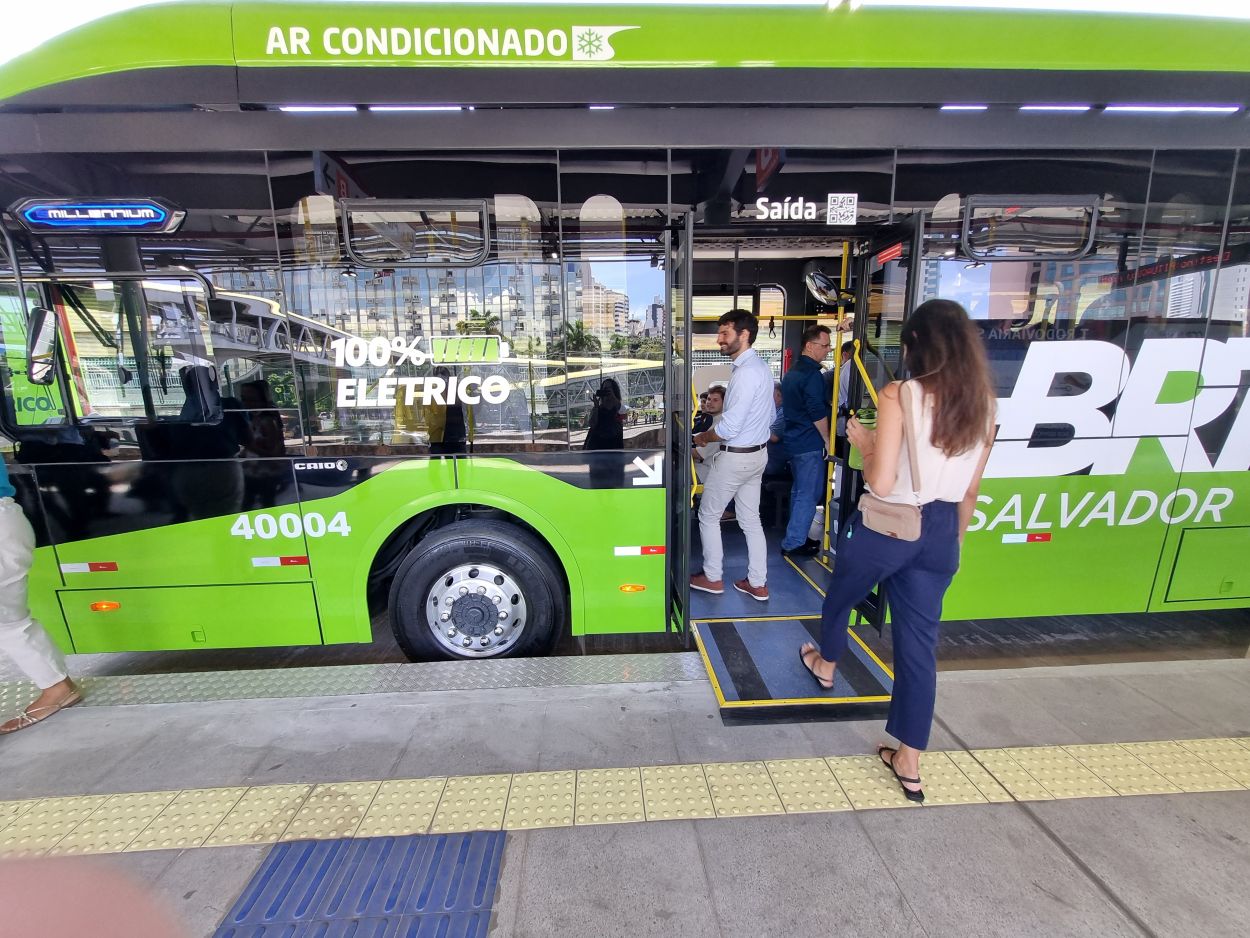
Passengers boarding an accessible and electric BRT Salvador bus.
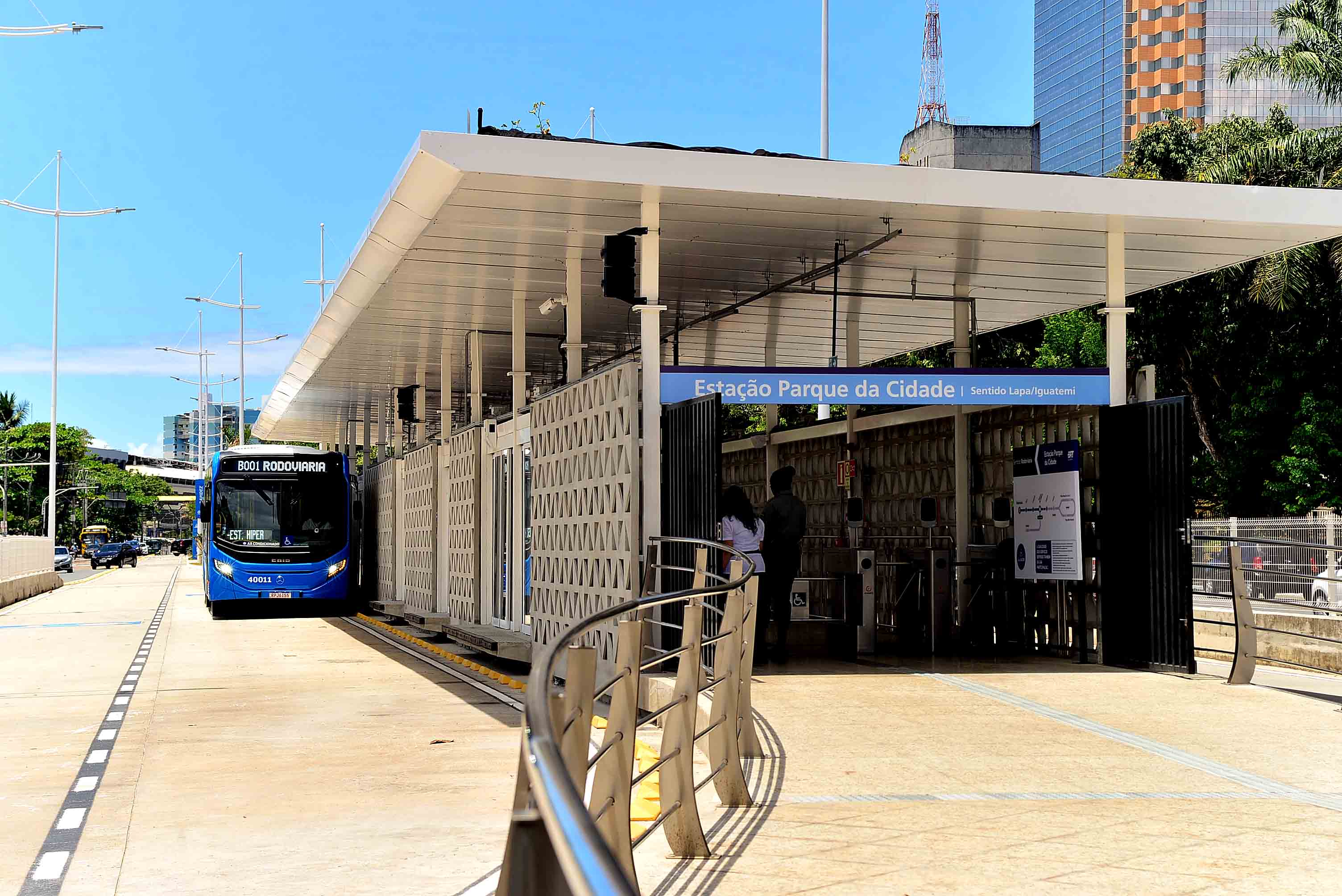
Bus and passengers at BRT Salvador station.
Salvador is joined by two STA honorable mentions this year: Kochi, India, and Santiago, Chile.
The city of Salvador, home to nearly three million people, has continued to invest in quality, electric public transport centered around its BRT Salvador system. In 2024, Salvador inaugurated a new 7 km corridor that marks a step forward in expanding bus access with several modern and accessible stations and specific public space interventions. The system now includes more than 12 kms along two BRT corridors operating with multiple lines. BRT Salvador also introduced a fleet of electric buses and began operating with an electric terminal dedicated to recharging these vehicles.
Several stations along the new corridor include key accessibility measures, such as elevators and level boarding, to help passengers with reduced mobility travel more comfortably. A few stations also offer monitored bicycle docks, bike and scooter sharing stations, and connections to new bike infrastructure. Overall, these features can encourage more multi-modal access between buses and active mobility — an essential part of any sustainable urban transport network. Now, residents have more opportunities to choose connected and convenient public transport options for their trips.
Since operations began in 2024-2025, the new BRT corridor has helped reduce 780 tons of cumulative CO₂ emissions, a number expected to rise as the buses expand their mileage to reach up to 220 kms-per-vehicle-per-day. In addition to the environmental benefits, the corridor has transformed daily commutes for many users. For example, the semi-direct line between the hubs of Lapa and Rodoviária Terminal has helped cut travel times from 45 minutes to just 18 minutes. According to SEMOB, the medium-capacity system’s efficiency and service has led to a 10% increase in ridership, signaling strong productivity and public support for BRT.
Beyond the physical infrastructure, Salvador’s system aims to emphasize safety and passenger care. Several stations feature 24-hour security and gender-balanced staff, supported by a welcome team that assists passengers inside and outside of stations. This focus helps underscore the project’s vision of a more secure and user-friendly public transport environment for all riders. This spotlight on better BRT reflects the city’s overall leadership on sustainable mobility with a focus on emissions reductions and social inclusion, reducing the demand for private vehicle use.
“This project represents a turning point for mobility across Salvador,” said Pablo Souza, Urban Mobility Secretary at SEMOB. “By investing in electric buses and accessible infrastructure, we are not only changing the way people move throughout the city, but also advancing our broader goals of improving equity, climate action, and quality of life. The BRT is already delivering real benefits to thousands of residents every day.”
Salvador is joined by two STA honorable mentions this year: Kochi, India, and Santiago, Chile.
Kochi is recognized for its innovative Water Metro ferry system that has transformed travel across the city’s ten inhabited islands by offering an affordable, efficient, and sustainable alternative to private vehicles. The system further integrates with existing metro rail, bus, and cycling infrastructure. Operating with a fleet of 78 electric-hybrid boats, the Metro provides reliable service at frequent intervals, helping reduce travel times across the city’s unique geography. For example, it has already been shown to reduce an hour-long road commute to just 20 minutes by water, all at nearly half the cost. Since its 2023 launch, the Water Metro has carried over 4.5 million passengers, averaging up to 6,000 riders a day. With its accessibility features, floating pontoons, and high safety standards, the project has become a model for low emission, integrated, and innovative public transport.
Santiago in Chile is also undergoing a historic transformation of its public transport, moving toward a 100% electric bus fleet in line with Chile’s national goal of carbon neutrality by 2050. Through new integrated bidding processes launched by the city’s Metropolitan Public Transport Authority (DTPM) in 2023 and 2025, more than 1,900 new electric buses and 55 charging terminals will be added to the RED Movilidad system, bringing the total to 4,400 electric buses by 2026, equivalent to 68% of the fleet. This shift will help avoid an estimated 8.6 million tons of CO₂ emissions by 2040, while improving air quality, health, and access for millions of people. The electric buses have already helped deliver 44% lower maintenance costs, 65% lower operating costs, and greater rider satisfaction.
“I am delighted by the honorees of this year’s STA program. Salvador’s commitment to expanding its BRT shows us that strategic investments and policies can drive real action on electric mobility while improving access, air quality, and equity,” said Heather Thompson, CEO of ITDP. “Alongside Kochi’s innovative Water Metro and Santiago’s impressive transition to electric buses, all three of this year’s honorees demonstrate that a focus on sustainable public transport can have immense benefits for the climate, the economy, and all communities.”
ITDP is eager to celebrate all of these cities' achievements and collaborate with them for the 2026 STA Series. Nominations for the 2027 program will open in February 2026 and close in April 2026. Semifinalists will be notified in June 2026 with a request to submit additional information. The winner and honorable mentions will then be notified internally in August 2026, with the public announcement taking place January 2027. Learn more at STAward.org.
Alphonse Tam
Institute for Transportation and Development Policy
+1 212-629-8001
alphonse.tam@itdp.org
Visit us on social media:
LinkedIn
Bluesky
Instagram
Facebook
YouTube
X
Other
Legal Disclaimer:
EIN Presswire provides this news content "as is" without warranty of any kind. We do not accept any responsibility or liability for the accuracy, content, images, videos, licenses, completeness, legality, or reliability of the information contained in this article. If you have any complaints or copyright issues related to this article, kindly contact the author above.
